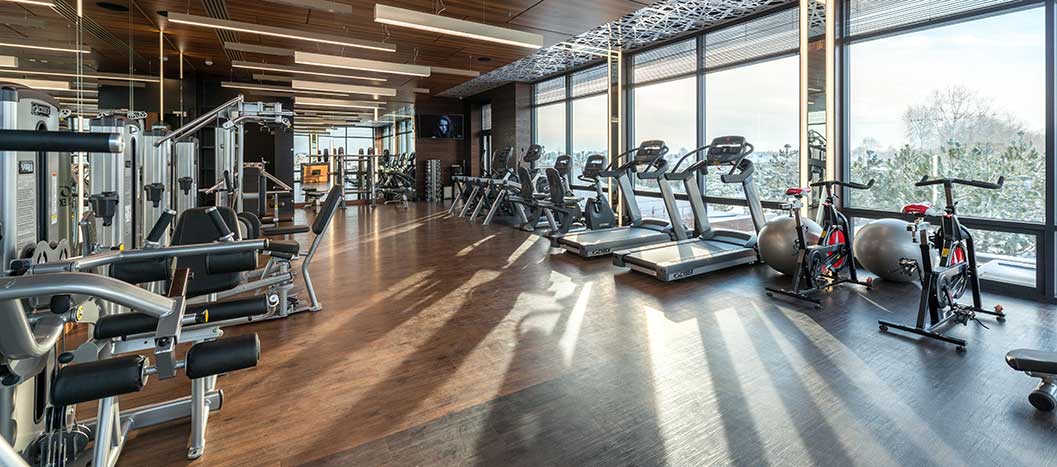
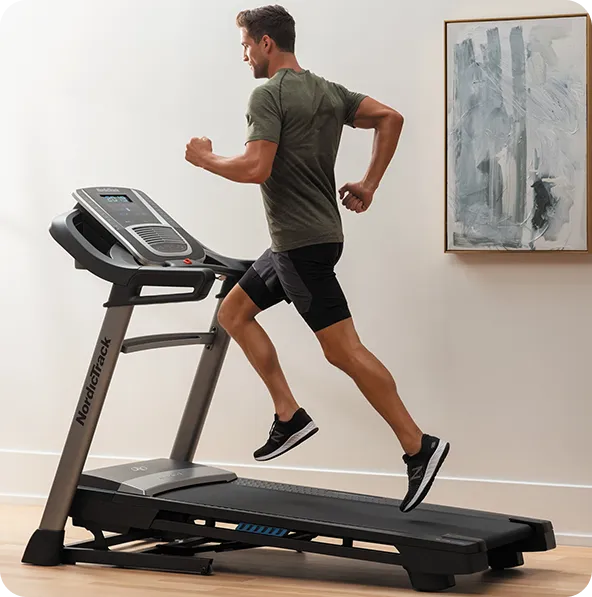
If your goal is to keep people moving without flaring up their knees, hips or back, machine choice matters as much as specs. Most buying guides stop at horsepower, flywheels and stride length. This guide adds the clinical lens – how design details and setup affect joint load, comfort and long-term adherence—so facility managers and home buyers can choose wisely.
Who this guide is for? (….and how to read it)
Many people can be tasked with purchasing cardio equipment. From condo property managers, corporate facility leads, gym owners, or a home buyer shopping for personal use. You can read the specification sheets but you may want confidence that your purchase won’t aggravate joints. We’ll keep things practical and non-technical, flagging research where it truly informs real-world choices.
What the research says about joint load on each machine
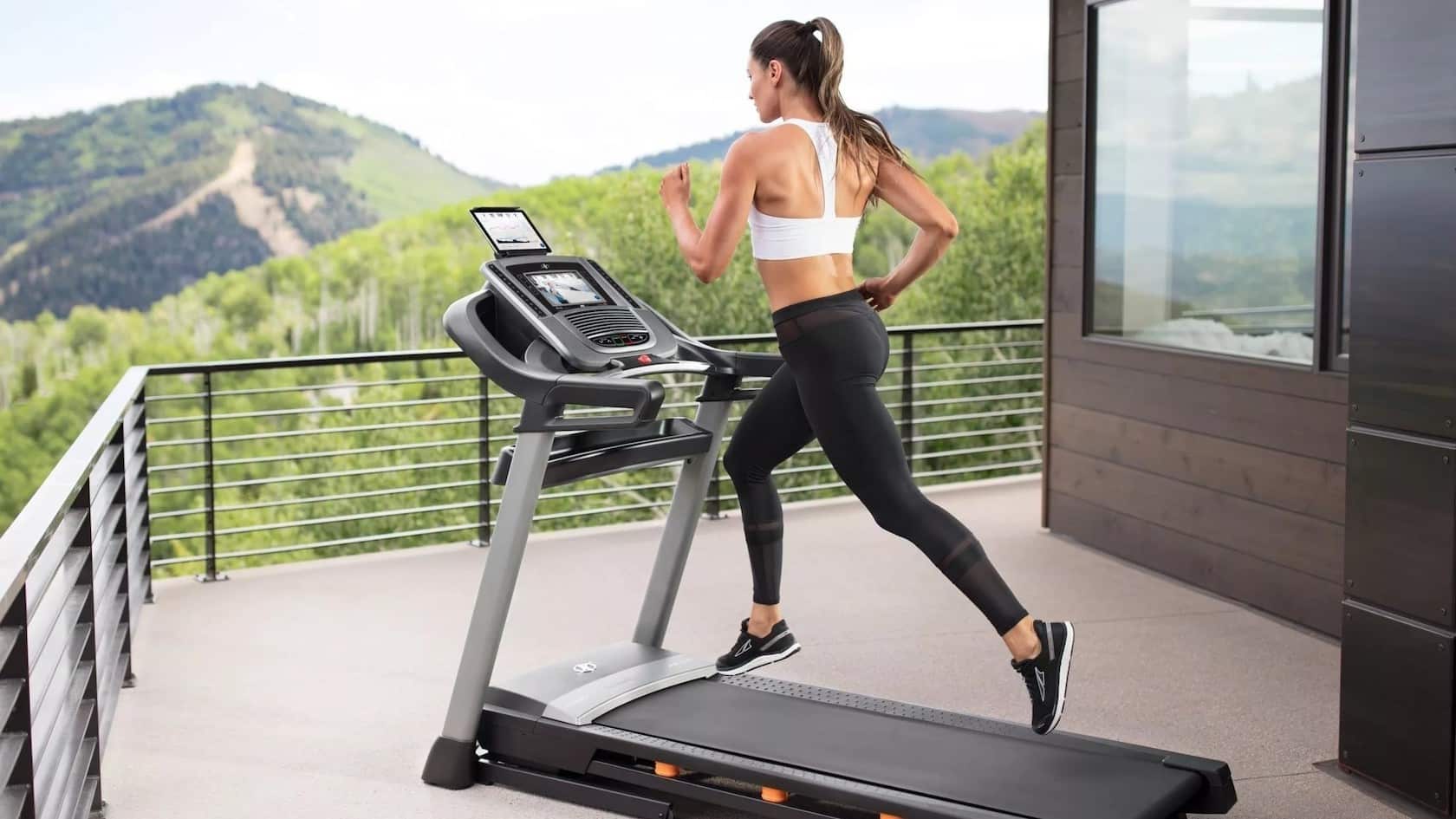
Treadmills: The Classic Cardio Machine 🏃♂️
Running produces vertical ground-reaction forces roughly 2.5–2.8× body weight; that’s normal for running but it’s still “higher impact” for sensitive joints. Walking is much gentler and is often well tolerated.
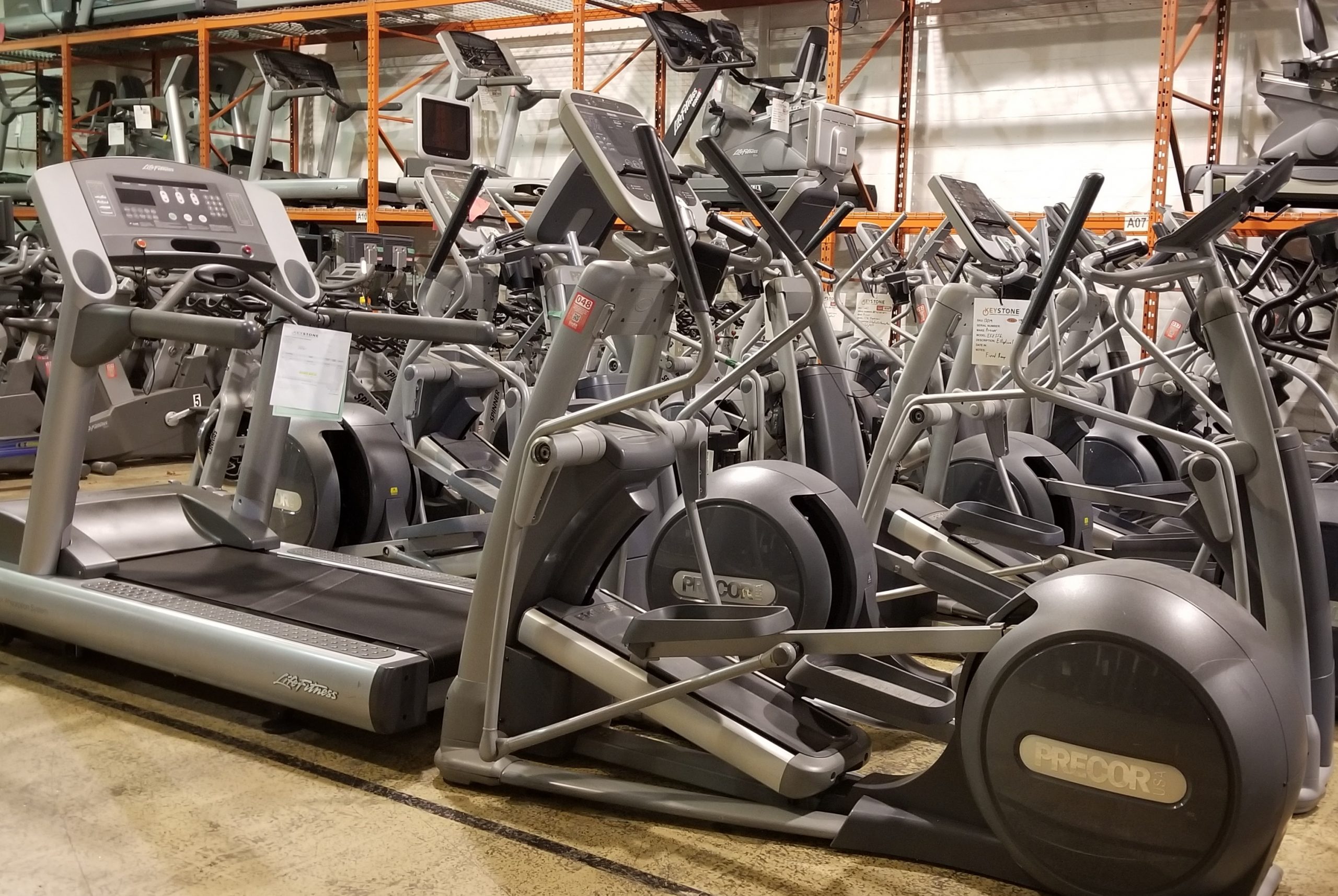
Ellipticals: Low-Impact, High Efficiency 💪
Because your feet never leave the pedals, ellipticals eliminate “pounding” on the joints and keep the knee in a relatively stable path—making them easier on hips and knees than running. At higher pedaling speeds, however, some studies find higher peak knee torque on ellipticals than on bikes, so fit and pacing still matter.
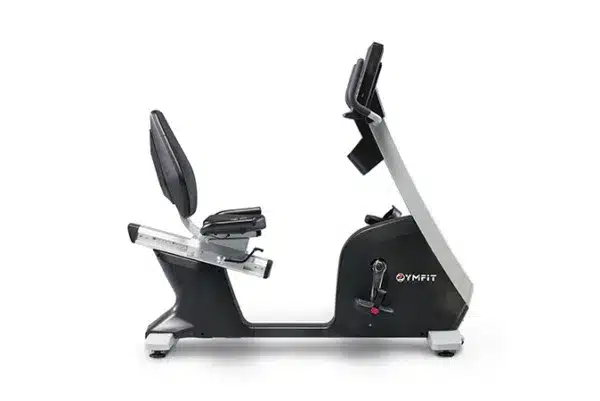
Stationary Bikes: A Comfortable and Effective Cardio Option 🚲
Telemetric (in-knee) data show tibiofemoral forces around ~1.2× body weight at easy workloads (e.g., 60 W, 40 rpm), lower than walking and far below running—one reason cycling is consistently recommended for joint-friendly cardio.
Big Picture Guidance 🤔
For people with arthritis or a history of joint pain, low-impact aerobic exercise is beneficial and safe when progressed gradually. Canadian public-health guidance continues to recommend ~150 minutes per week of moderate-to-vigorous aerobic activity (in bouts that feel manageable), which can include walking, cycling and elliptical training
Physiotherapist’s Checklist To Purchase The Right Machine
Treadmills: Look for a joint-friendly deck
- Shock absorption that actually cushions: step on, then jog lightly—does the deck feel “muted” rather than wooden?
- Generous deck size: aim for ~55–60″ length (home) and ~60″+ (commercial) so users don’t overstride.
- Low step-up height and sturdy, ergonomic rails for older adults.
- Incline used thoughtfully: a small incline (e.g., 2–3%) can shorten stride and feel easier on knees; avoid steep grades if users report patellofemoral pain.
- Program for walking, not just sprints: prioritize smooth belt tracking at slower speeds and a responsive emergency stop.
- Showroom test (2 minutes): walk at your normal pace; note any knee/front-of-knee pressure. Slight incline okay; if pain rises quickly, try an elliptical or bike instead.
Ellipticals: Fit the stride, protect the knees
- Stride length that suits your users (often ~18–22″); overly long strides can tug hips and knees.
- Footplate design: mild medial/lateral tilt options and a moderate Q-factor (pedal spacing) reduce hip/knee stress.
- Stable frame with low step-on height and smooth resistance changes (no sudden surges).
- Upper-body handles for full-body training without extra leg load.
- Showroom test (2 minutes): pedal forward and backward at easy cadence; check for knee tracking (knees staying over mid-foot). If knees dive inward, adjust footplates or try a different model.
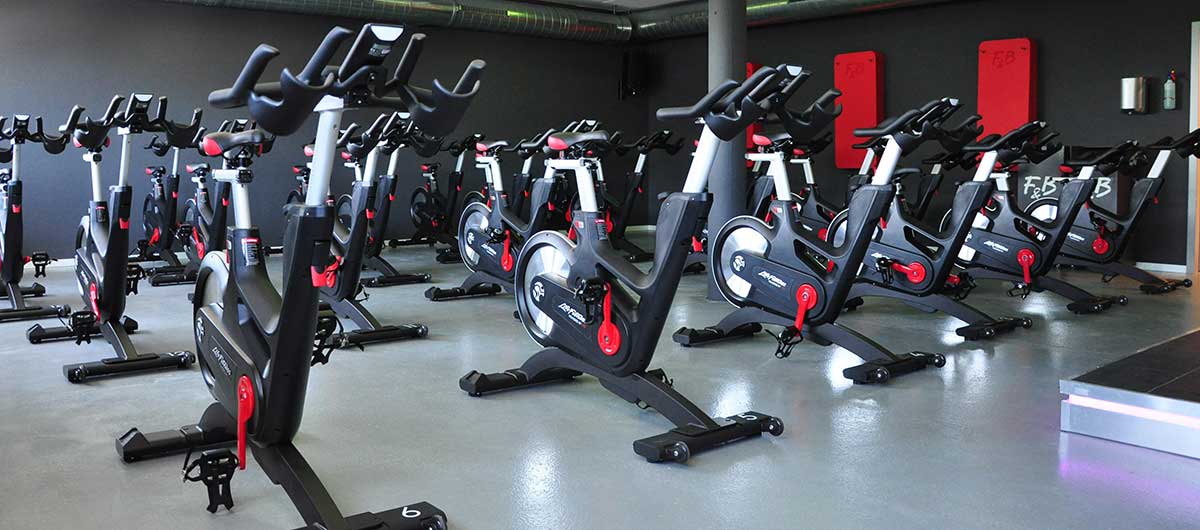
Stationary Bikes: Dial in geometry to spare the joints
- Seat height for a knee angle ~25–35° at the bottom of the pedal stroke; too low increases knee load.
- For comfort-first populations, include recumbent bikes with step-through frames and supportive backrests.
- Moderate Q-factor (pedal spacing) and fore-aft seat adjustments to keep knees tracking comfortably.
- Smooth resistance with low starting inertia for easier warm-ups.
- Showroom test (2 minutes): spin lightly; the knee should feel “greased,” not pressured. If the front of the knee aches, raise the seat slightly.
Try a Simple “Joint-Friendliness” Showroom Test
- The two-minute pain check: rate joint comfort before/after two minutes at easy pace. If pain spikes and remains after two hours, you overdid it—scale back next session.
- Track the knees: from the front, do knees stay over the second toe (not caving inward)? If not, adjust fit or try another model.
- Balance and step-on safety: can older users mount and dismount confidently? Prioritize low step-up heights and stable rails.
- Noise and vibration: excess vibration can signal poor damping or bearings—often felt as “buzz” in the knees or hips.
Benefits and Myths You Should Know
The Bottom Line: Low-impact cardio is a keeper
Regular aerobic activity reduces joint pain and stiffness, strengthens the muscles that support joints, and improves function—even in knee or hip osteoarthritis. Low-intensity cycling can match higher-intensity cycling for easing pain in knee OA, which is good news for adherence.
Two Myths: Time to retire this mindset
- “If my joints hurt, I should avoid exercise.” Inactivity tends to make pain and stiffness worse over time; graded movement is part of the solution, not the problem.
- “Only high-impact workouts ‘count.’” Ellipticals and bikes deliver meaningful cardio with far lower joint stress; for bone health, include some tolerated weight-bearing like walking.
What We See In the Clinics
In our caseload, we routinely see two patterns:
- Facilities that switch from “fast” treadmills to mixed fleets (shock-absorbing treadmills + ellipticals + recumbents) report fewer member complaints about knees and backs and better program adherence among older adults.
- Home users who learn basic bike/treadmill setup (seat height, stride length, small incline) come back reporting “I can finally do 20–30 minutes without a flare.” Education and fit matter as much as the machine.
If you’re unsure where to start, a brief consult with a registered professional in physiotherapy can help you choose machines, set them up correctly, and build a progression plan that keeps pain in check.
Considerations When You are Buying For Others
- Stock for inclusivity: pair shock-absorbing treadmills with at least one elliptical and one recumbent bike to cover a spectrum of needs.
- Make it easy to get started: post quick-start setup cards at each machine (seat height, stride fit, incline suggestions).
- Program consistency, not heroics: encourage 10–15-minute bouts to build confidence; Canadian guidance emphasizes accumulating ~150 minutes per week over time.
Turn Insights into Action
- If you’re outfitting a facility: short-list models that pass the “joint-friendliness” tests above and invite a trial day for your key user groups (older adults, return-to-exercise members).
- If you’re buying for home: pick the modality you tolerate best now (often bike or elliptical), then add walking volume gradually on a cushioned treadmill if bone health is a priority.
- If pain keeps derailing, you or your members: book a form check and progression plan with a clinician—small fit tweaks and gradual loading are the difference between quitting and consistency.
Author:
Laura Cáceres